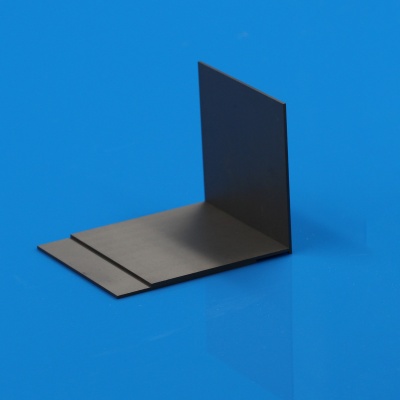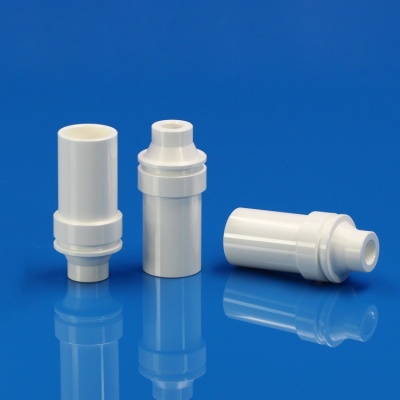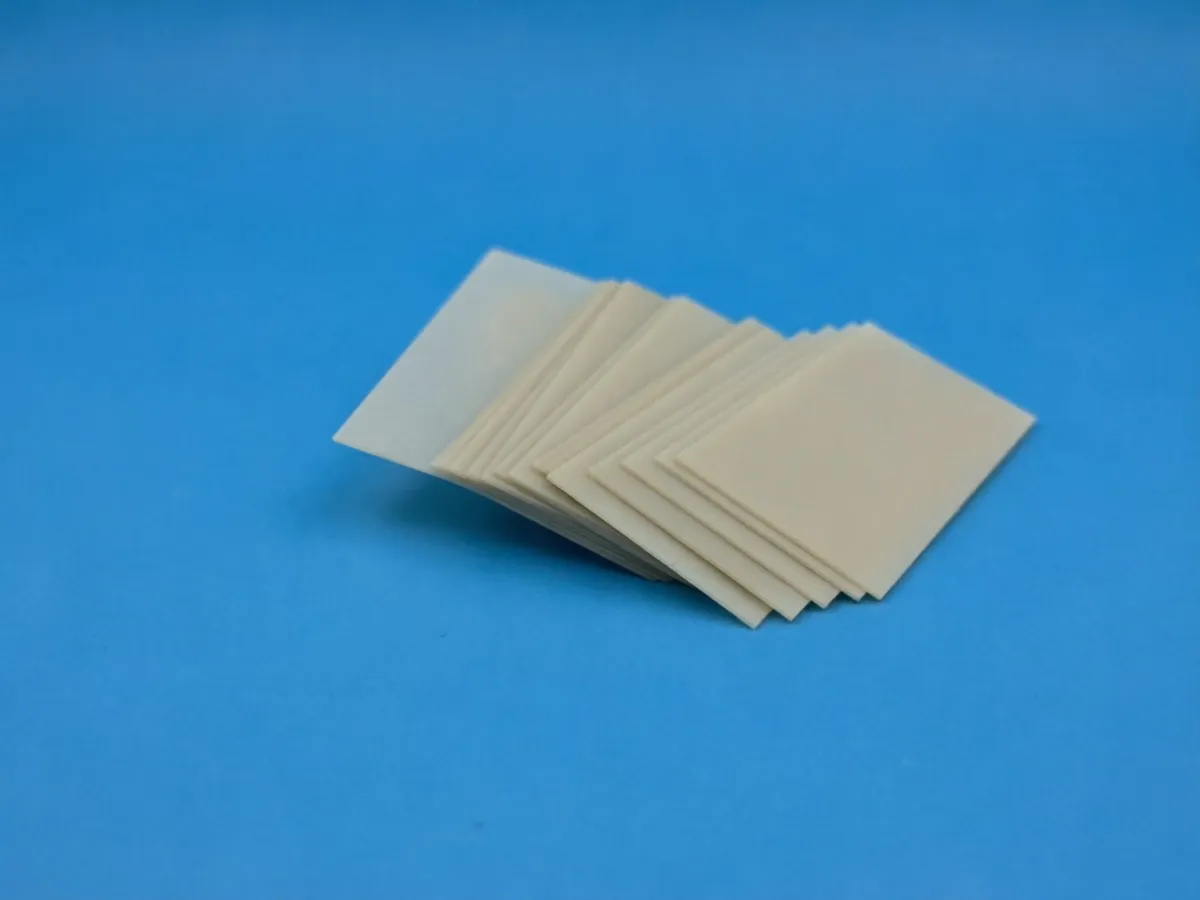


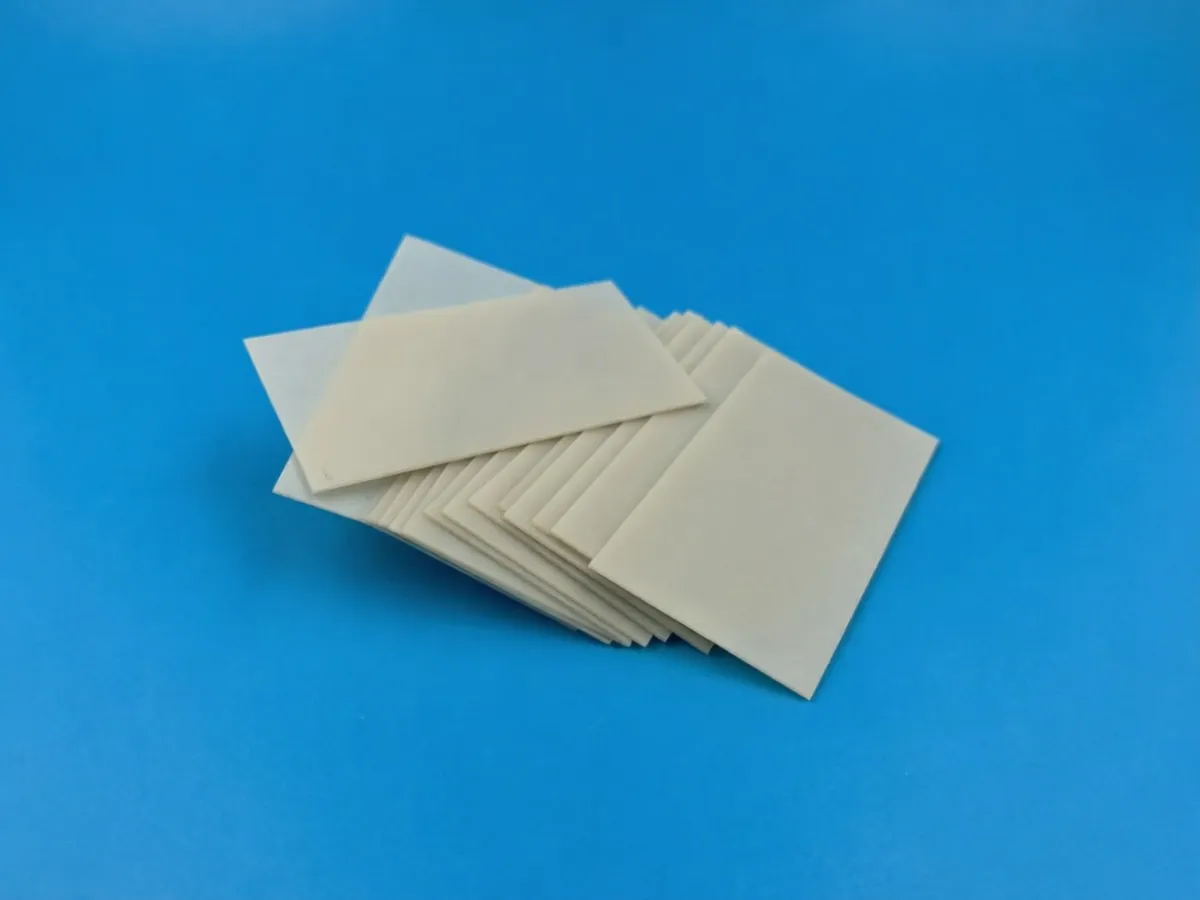
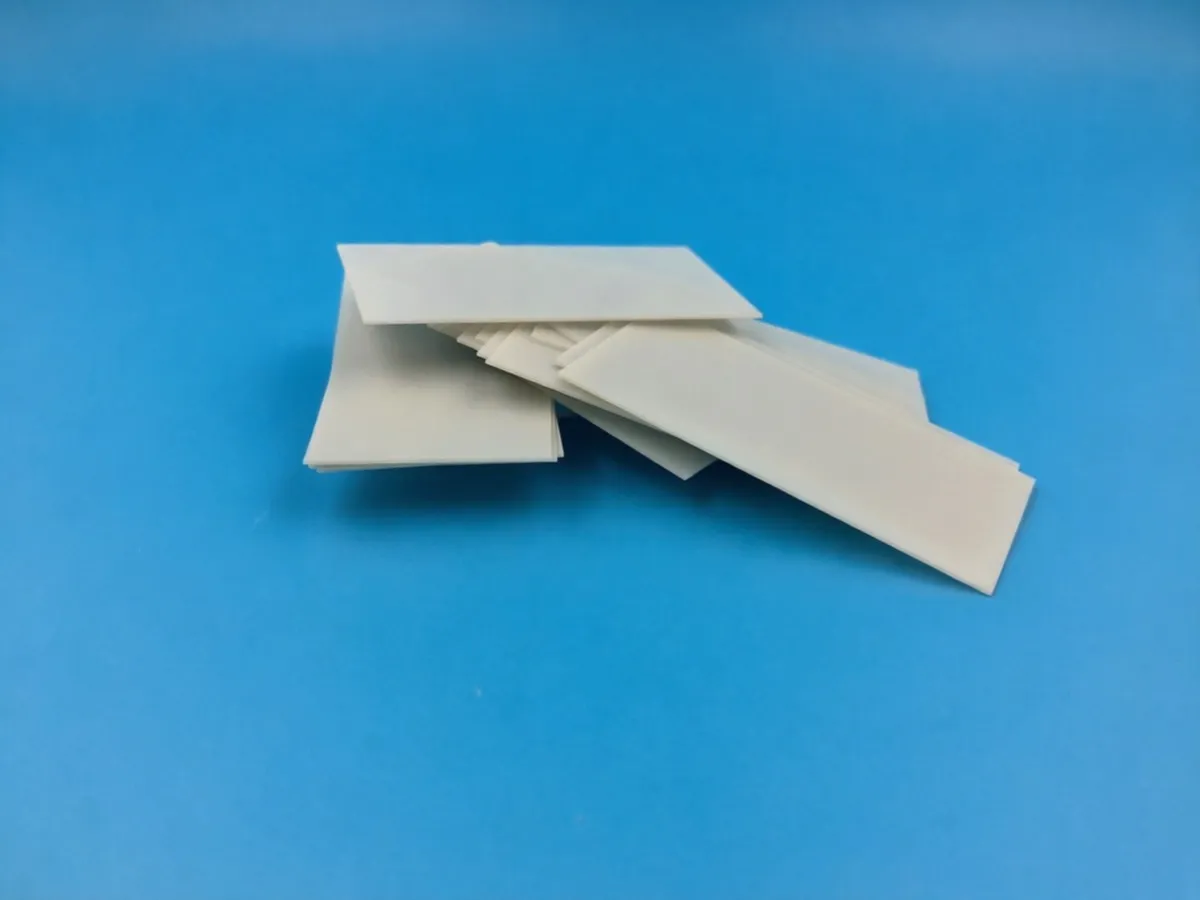
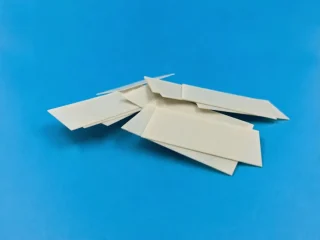

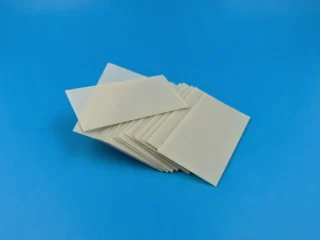
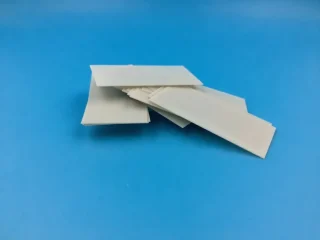
INNOVACERA provide precision ground AlN substrates with extreme surface flatness, supporting various metallization processes such as DPC (Direct Plated Copper) and AMB (Active Metal Brazing) to ensure your products operate stably in the most demanding environments.
Advantages:
| Feature | Technical Value |
| Ultra-High Thermal Conductivity | Thermal conductivity reaches 170–230 W/m·K, 7–10 times that of traditional Alumina ceramics, solving heat dissipation challenges at the source. |
| Matched CTE | CTE is approximately 4.5 ppm/°C, highly matched with Silicon (Si) and Gallium Nitride (GaN), significantly reducing thermal stress and enhancing packaging lifespan. |
| Superior Electrical Insulation | Features high volume resistivity and dielectric strength, ensuring electrical safety and signal integrity in high voltage and high frequency environments. |
| Leading Surface Technology | Typical roughness Ra ≤ 0.5 μm ensures high precision and yield for chip mounting, supporting complex circuit interconnections. |
Product Specifications & Selection
We offer three standard specifications with a thickness of 1.0mm, and customization is available upon request.
| Model | Dimensions (L×W) | Recommended Applications | Selection Advice |
| Model A | 37 × 26 mm | IGBT modules, Automotive OBC, Large scale optical modules | Provides a larger effective cooling area, suitable for high-power, complex packaging. |
| Model B | 35 × 22 mm | 800G/1.6T Optical Modules, RF Power Amplifiers (PA) | The mainstream market specification, offering a balance of performance and cost with a mature supply chain. |
| Model C | 25 × 20 mm | Automotive LED, Industrial lighting, Small-scale sub-modules | High cost-effectiveness, ideal for size-constrained or cost-sensitive scenarios. |
Application:
1. High Speed Optical Modules (800G / 1.6T)
- Application Value:Addresses the extreme heat flux density challenges of up to 15–20W/cm² in 1.6T modules.
- Industry Trend:Driven by AI demand, AlN substrate usage per module has increased to 3-4 pieces, making it a cornerstone of data center upgrades.
2. RF & Microwave Communication (5G / Satellite)
- Application Value:Low dielectric loss (tanδ < 0.001) design, optimized for high frequency signal transmission, providing critical cooling and support for GaN power transistors.
- Frequency Coverage:Widely used in 5G NR, Millimeter Wave (mmWave), and Satellite Communication Ka-band.
3. New Energy Vehicles (Power Electronics / IGBT)
- Application Value:Perfectly suited for 800V platforms, providing hig -reliability insulation and cooling for SiC MOSFET and IGBT modules.
- Benefits:Meets rigorous requirements for thermal cycling, thermal shock, and vibration, enhancing drivetrain efficiency.
4. High Power LED (Automotive Headlights / Industrial Curing)
- Application Value:Ideal for COB or multi chip integrated modules, effectively exporting heat to ensure high luminous efficiency and ultra long lifespan.
- Scenarios:Intelligent LED headlights, industrial UV curing, and high end commercial lighting.
Why Choose Us?
Our products are widely utilized by global leaders in communication equipment, cloud service providers, and NEV supply chains. With stringent quality control and deep technical expertise, we provide more than just high quality ceramic substrates we offer one-stop solutions from selection to metallization.
If you are looking for thermal management solutions to enhance product reliability, please contact our technical experts.
Frequently Asked Questions
What is an aluminum nitride ceramic substrate?
An aluminum nitride ceramic substrate is a high-performance ceramic base
material used for electronic packaging applications that require high thermal
conductivity, electrical insulation, mechanical stability and reliable heat
dissipation.
What thermal conductivity can aluminum nitride substrates provide?
INNOVACERA aluminum nitride ceramic substrates provide thermal conductivity
of 170230 W/m·K, making them suitable for high-power electronic packaging,
optical modules, high-power LEDs, laser diodes and power semiconductor
devices.
Why choose AlN substrates instead of alumina substrates?
Aluminum nitride substrates offer much higher thermal conductivity than
traditional alumina ceramic substrates. This helps reduce heat accumulation,
lower device operating temperature and improve long-term reliability in high
power electronic applications.
Can aluminum nitride substrates be metallized?
Yes. Aluminum nitride substrates can support metallization processes such as
DPC, AMB, thick-film metallization and thin-film metallization, depending on the
circuit design, bonding method and application requirements.
What metallization processes are available for AlN substrates?
Common metallization options for AlN substrates include DPC for fine circuit
patterns, AMB for high-reliability power modules, and thick-film or thin-film
metallization for customized electronic packaging solutions.